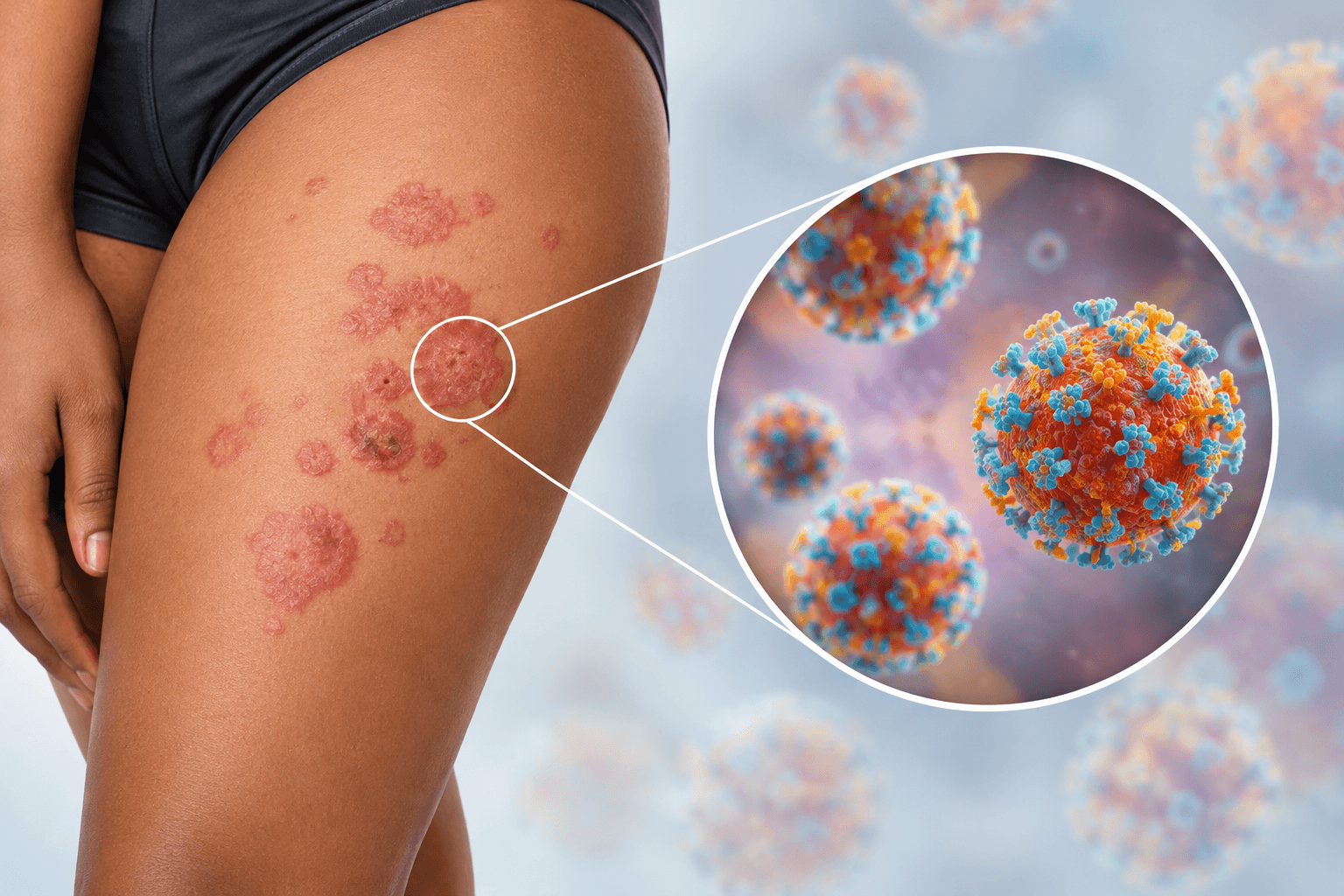
A New STI is Spreading What You Should Know About TMVII
TMVII is a fungal skin infection that passes between people mainly through intimate contact, which is why doctors now treat it as a sexually transmitted infection. The name is short for Trichophyton mentagrophytes genotype VII, a strain of the same fungus family behind ordinary ringworm, athlete's foot and jock itch.
What makes it different is how stubborn it is. The usual drugstore antifungal creams rarely clear it, and the rash tends to be angrier and more widespread than a typical ringworm patch.
TMVII is not a brand-new organism, but it has only recently been recognised as a cause of outbreaks. Most reported cases have been in gay, bisexual and other men who have sex with men. But anyone who has skin-to-skin contact with an infected person can catch it. Because TMVII isn't routinely tracked everywhere, experts think the real number of cases is higher than reported.
How it spreads
The fungus lives in the rash itself, so touching infected skin is the main route. Sex of any kind (oral, anal or vaginal) involves lots of close skin contact, which is why it spreads so efficiently between partners.
Less often, it can pass through things that have touched the rash: towels, bedding, clothing or sex toys. Pets can occasionally pick it up too, showing patches of hair loss or irritated skin.
What are the Symptoms?
Symptoms can vary. Some people develop mild redness or ringworm-like rashes often with a raised or darker border, while others experience more severe scaling or blisters. They usually show up anywhere from a few days to a few weeks after contact.
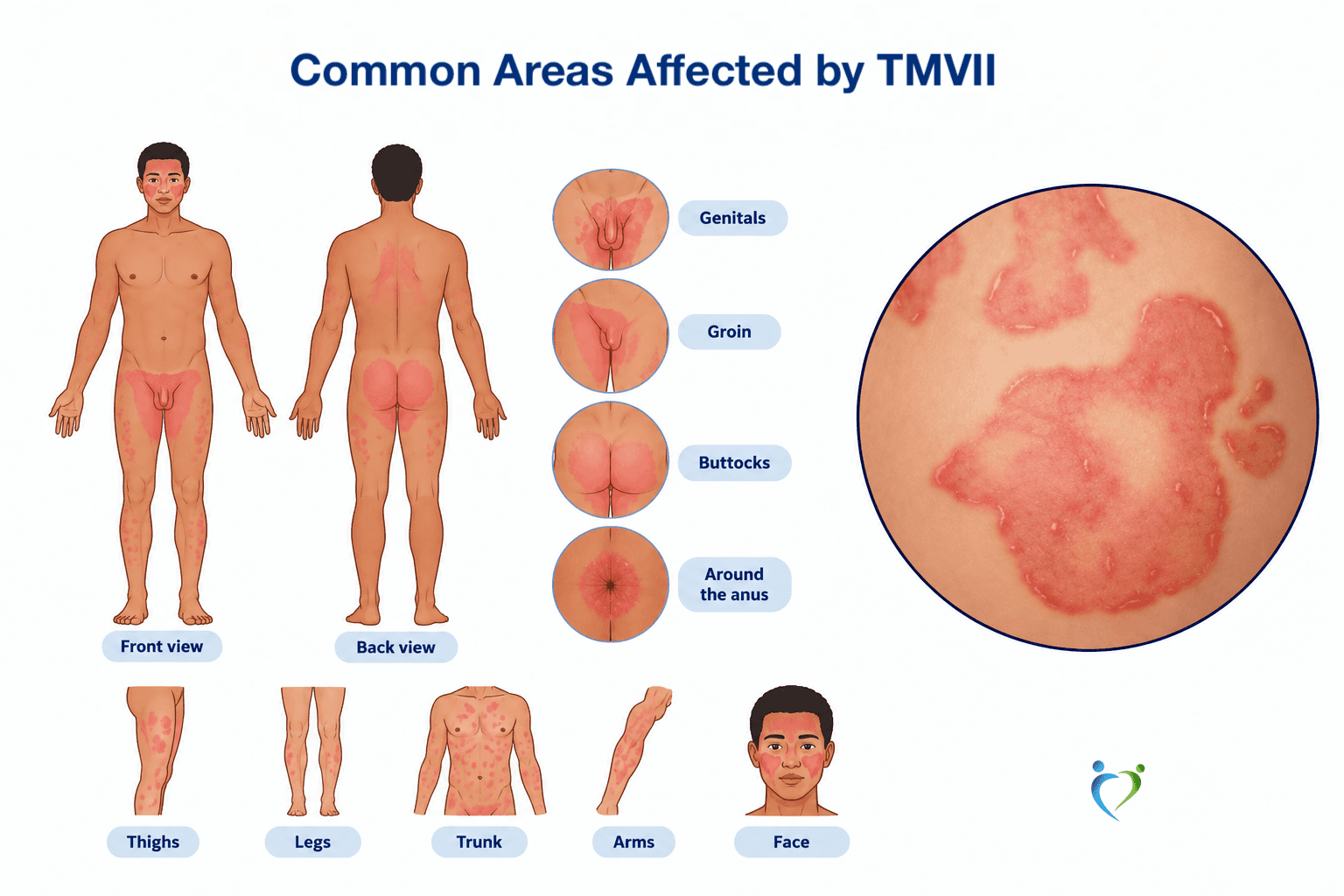
The rash most often appears on the genitals, groin, buttocks and around the anus, but it can also spread to the thighs, legs, trunk, arms and face.
It is easy to mistake for eczema, an ordinary fungal rash or another STI, which is one reason it often goes undiagnosed at first.
What should you do if you suspect an infection?
A big clue is a "ringworm" rash that refuses to budge after a few weeks of antifungal cream. See a doctor or sexual health clinic if you have a rash in the genital area, or anywhere, that's painful, spreading or hasn't improved with cream. Mention any recent sexual contact or travel, as this helps them think of TMVII.
Need Our Services?
Book an appointment with our experienced healthcare professionals.